

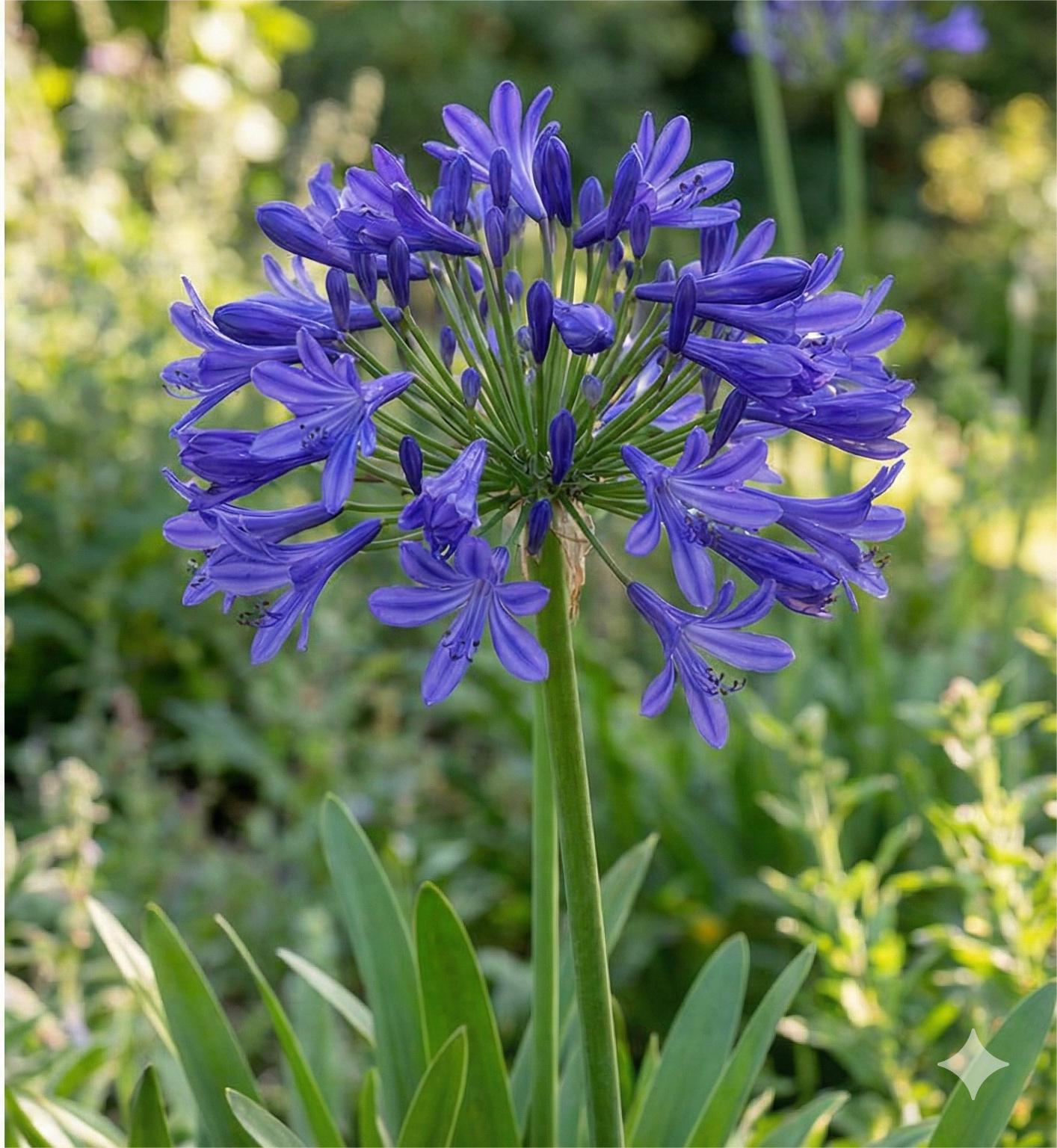
Agapanthus ‘Alexander’
A Regal Beauty with Intense Violet-Blue Blooms
Elevate your summer garden with the majestic presence of Agapanthus ‘Alexander’, a superior variety known for its outstanding color and robust form. This deciduous African Lily is a must-have for creating striking visual impact during the warmest months of the year.
At the peak of summer, ‘Alexander’ sends up tall, sturdy stems that can reach up to 1 meter (3-4 feet) in height. Each stem is crowned with a magnificent, large globe-shaped head (umbel) packed with numerous trumpet-shaped flowers. The color is its most defining feature: a rich, deep, and intense violet-blue that is truly captivating and stands out brilliantly against more common, lighter-colored varieties.
Why Agapanthus ‘Alexander’ is a Garden Favourite
-
Striking Colour: The deep violet-blue is one of the darkest and most desirable shades available in an Agapanthus.
-
Architectural Form: The tall flower stems rise elegantly above a lush, clump-forming mound of strap-like, bright green foliage, providing excellent vertical interest and structure.
-
Pollinator Magnet: The nectar-rich flowers are highly attractive to bees, butterflies, and other beneficial pollinators, bringing life and movement to your garden beds.
-
Versatile Use: It is equally at home in the middle of a sunny herbaceous border, as a striking accent plant, or planted in a large pot on a patio or terrace. The strong stems also make it an excellent, long-lasting cut flower for indoor arrangements.
-
Reliable & Hardy: This variety is a hardy, deciduous Agapanthus, meaning its leaves die back in winter, and the plant goes dormant, allowing it to withstand colder winter temperatures better than many evergreen types.
Planting & Care Guide
-
Position: Thrives in full sun. The more sun it gets, the better it will flower.
-
Soil: Prefers fertile, well-draining soil. It does not like to sit in waterlogged conditions in winter.
-
Watering: Water regularly during the growing season, especially in dry spells, to ensure the best display of flowers.
-
Maintenance: Remove faded flower heads after blooming to tidy the plant and prevent energy from being used to set seeds. In late autumn, the foliage will turn yellow and die back; you can tidy this away once it has completely withered. A mulch in autumn can help protect the crown in very cold areas.
Reviews
There are no reviews yet.